

Impact Doors in Cape Coral That Complete Your Hurricane Protection
In this article
By Tim Harwood, Owner of AGT Builders
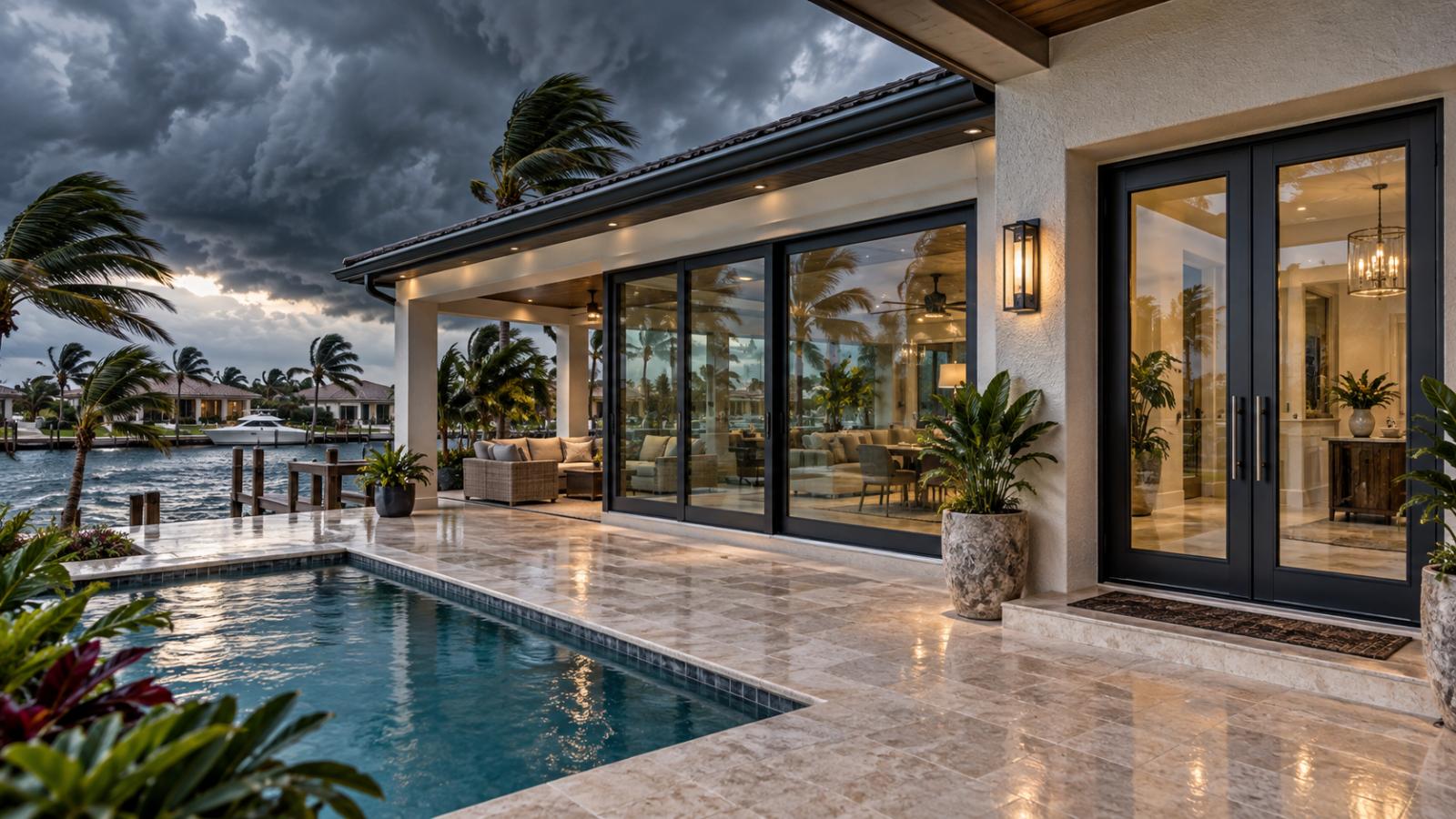
If you already have impact windows, you may be wondering whether you really need impact doors too. For most Cape Coral homes, the answer is yes. A hurricane doesn’t care which openings you spent money on. It looks for the weakest one, and in a house with impact windows, that weak spot is very often a front door, a set of French doors, or a sliding glass door onto the lanai. Impact doors in Cape Coral close that gap so the protection you already paid for can do its job.
September is the right month to think about this. The height of hurricane season is here, the Gulf is warm, and the storms that reach Southwest Florida this time of year can be strong and fast moving. In this post, we’ll explain why doors matter as much as windows, how the different door types compare, what impact ratings and Florida product approvals mean, and how to plan a door upgrade around the storm calendar. We’ll also cover the questions homeowners in Cape Coral, Fort Myers, and the rest of Lee County ask us most often.
Why Your Doors Matter as Much as Your Windows
It’s easy to think of hurricane protection as a window problem. Windows are the obvious targets, and they are usually the first thing homeowners upgrade. But a home’s envelope works like a chain. If one link fails, the rest of the chain is under far more stress than it was designed to handle.
When wind and debris break through any opening, air rushes into the house. That air has to go somewhere, and it pushes outward on the walls and upward on the roof. The Insurance Institute for Business and Home Safety explains that once wind gets inside, it can create strong upward pressure that tries to lift the roof off. The same organization notes that 80 to 85 percent of catastrophic residential losses start with damage to the roof. In other words, a failed door isn’t just a broken door. It can be the start of much bigger structural damage.
That’s why we tell homeowners that protection is only as strong as the weakest opening. You can have excellent impact windows on every wall, but if a large sliding door on the back of the house is standard glass, a single piece of flying debris can undo much of the benefit.
Doors are large openings
Doors tend to be the biggest openings in a home. A typical sliding glass door or a pair of French doors has far more glass and far more surface area than most windows. Larger surfaces catch more wind pressure, and more glass means more area for debris to strike. Many Cape Coral homes have wide sliders facing canals or the Gulf, where there’s nothing to slow the wind down before it reaches the house.
Doors move, and moving parts are weak points
Windows are often fixed or open in a limited way. Doors are built to open and close every day. Hinges, tracks, latches, and thresholds all create places where a door can flex, rack, or pull away from the frame under high wind. An impact door is designed and tested as a complete system, so the frame, hardware, and glass work together instead of failing at the weakest joint.
Impact Doors in Cape Coral by Type
Not every door faces the same risks. Here is how we think about the main door types we see in Southwest Florida homes.
Impact entry doors
The front door is the one opening almost every homeowner uses daily, and it’s often the one people forget to upgrade. Many older entry doors in Cape Coral were installed before current code standards, and decorative glass inserts or sidelites can be especially vulnerable. An impact entry door combines a reinforced slab, a heavy-duty frame, multipoint locking hardware, and laminated glass in any glass sections.
Entry doors are also about curb appeal. Impact models are available in a range of materials and styles, from clean modern looks to traditional designs with glass accents. You can see some of the styles we offer on our entry doors page.
Impact French doors
French doors bring light and character into a home, and they are popular on Cape Coral patios and pool areas. The trade-off is that a pair of French doors has two moving panels that meet in the middle, plus a lot of glass. That meeting point is a classic weak spot in older doors, because standard hardware can let the panels push apart under pressure.
Impact French doors use laminated glass along with reinforced astragals (the vertical piece where the panels meet) and hardware that locks at multiple points along the height of the door. This lets you keep the look you love without leaving a vulnerable opening at the back of the house. Our French door options include a variety of styles for residential and commercial spaces.
Impact sliding glass doors
Sliding glass doors are everywhere in Southwest Florida. They open homes to lanais, pool cages, and water views, and for many Cape Coral homeowners they are the main connection between inside and out. They are also some of the largest glass openings in any house.
An impact slider uses laminated glass panels, heavier frames, and reinforced tracks and interlocks. Because sliding doors are so wide, the design pressure rating matters a great deal, and the right door for a canal-front home facing open water may be different from the right door for an interior courtyard. You can learn more on our sliding glass doors page.
Bifold and folding doors
Large bifold and folding door systems have become a favorite in newer and remodeled homes around Southwest Florida. They let you open an entire wall to the lanai. Impact-rated versions are available, and they need careful attention to product approvals, sizing, and installation because of how much opening they cover. If this is the look you want, ask about impact-rated bifold doors early in your planning.
Don’t forget the garage door
The garage door is often the single largest opening on a house, and it’s one many homeowners overlook when they think about storm protection. The Insurance Institute for Business and Home Safety reports that high winds can push a garage door inward and allow pressure to build inside the home, pushing up on the roof and out on the walls. Its research found that 90 percent of homes whose garage door survived the storm had no structural damage to the roof. Even if you’re focused on entry, French, and sliding doors right now, it’s worth checking whether your garage door carries a wind rating suited to your area.
What Impact Ratings and Florida Product Approvals Mean
Shopping for impact doors comes with a lot of technical terms. You don’t need to become an engineer, but understanding a few basics will help you compare options and ask better questions.
Impact resistance
An impact-rated door has been tested to withstand strikes from wind-borne debris, followed by repeated cycles of positive and negative wind pressure. The idea is to simulate what happens in a real storm. A branch or roof tile hits the door, then the wind keeps pushing and pulling on it for hours. A true impact door is designed to stay in place and keep the opening closed even if the glass cracks.
That last point surprises some homeowners. Impact glass is laminated, meaning it has a tough interlayer bonded between panes. When it’s hit hard enough, it may crack, but the interlayer holds the pieces together so the opening stays sealed. That’s very different from standard tempered glass, which is designed to shatter into small pieces.
Design pressure ratings
Design pressure, often shown as a DP rating, describes how much wind pressure a door is built to handle. Higher numbers mean the product is rated for stronger pressure. The rating you need depends on where your home sits, how exposed it is, the size of the opening, and the height of the building. A home on an open canal or facing the Gulf may need a higher rating than a home tucked into a neighborhood with more buildings and trees nearby.
Florida product approval
Florida has a statewide system for approving building products like exterior doors, windows, and shutters. According to Palm Beach County’s Building Division, this system was created to bring uniform, consistent standards for product evaluation and enforcement across the state, and it covers categories that include exterior doors, windows, and shutters. The state keeps a searchable database of approved products on the Florida Building Code Online product approval search, where you can look up a product by its FL number or manufacturer.
When you get a quote for an impact door, ask for the product approval number. It lets you confirm the product is approved for use in Florida and see the conditions of that approval, including the size limits and installation methods it was tested with. A good contractor will be glad to share it.
Installation matters as much as the product
An approved impact door is only as strong as its installation. The approval documents spell out how the door must be anchored, which fasteners to use, how far apart they go, and what the surrounding structure needs to look like. If a door is installed with the wrong fasteners or into a weak opening, it may not perform the way it did in testing. This is one reason AGT Builders uses full-time employee installers rather than subcontractors. Our crews are trained on the products we install and follow the approved installation methods on every job.
Why September Is the Time to Plan
According to the National Oceanic and Atmospheric Administration, the statistical peak of the Atlantic hurricane season falls on September 10. NOAA explains that activity surges from mid-August through early October because wind shear drops, ocean temperatures in the tropics rise, and the atmosphere holds more moisture. Those conditions make it easier for storms to form and strengthen.
For Cape Coral homeowners, this is the stretch of the season when storms are top of mind. It’s also when many people realize, sometimes while taping plywood over a slider, that their doors are the missing piece of their protection plan.
Here is the practical reality. Impact doors are usually custom sized, ordered from the manufacturer, and installed with a permit. That takes time. If you start the process in late September, your project will likely be ordered and scheduled for the coming months, which puts you in a strong position well before next June. Homeowners who wait until spring often find themselves competing with everyone else trying to finish before the next season starts.
A simple planning timeline
- Now through October. Walk your home and list every exterior door. Note which ones are impact rated and which are not. Schedule an estimate.
- Late fall. Choose your products, confirm product approvals, and let your contractor handle measurements and permitting.
- Winter dry season. This is a comfortable time for installation in Southwest Florida, with lower humidity and fewer afternoon storms.
- Spring. Your home is fully protected before hurricane season begins on June 1.
Local Conditions That Put Extra Stress on Cape Coral Doors
Cape Coral is known for its canals, and many homes back right up to the water. That view is a big part of why people love living here, but it also means many back doors face open water with little to break the wind. Canal-front and gulf-access homes in areas like the Yacht Club and Cape Harbour can see strong, direct gusts during tropical storms and hurricanes.
Salt air is another factor. Homes near the water and in gulf-access neighborhoods deal with salt exposure that can corrode hardware and frames over time. When choosing impact doors, it’s worth asking about corrosion-resistant hardware and finishes, especially for sliders and French doors that face the water.
Then there’s the everyday climate. Intense sun, high humidity, and heavy summer rain all wear on doors. Weatherstripping breaks down, frames can swell or warp, and seals fail. An impact door upgrade is a chance to address those issues too, with a door built for Florida conditions year round rather than just on storm days.
The same conditions apply across our service area, from Fort Myers to Bonita Springs, Naples, Sanibel, and Marco Island. Coastal and island homes often face the highest exposure, while inland homes still deal with debris from trees, fences, and neighboring structures.
Signs Your Current Doors Need Attention
Not sure where your doors stand? These are some of the things we look for when we visit a home.
- No impact label or approval. Many impact products carry a permanent label or etching. If you can’t find one and don’t have paperwork from the installation, your door may not be impact rated.
- Older sliders with sticky or worn tracks. A slider that is hard to open or rattles in the frame may not seal well or hold up under pressure.
- Decorative glass in the front door. Glass inserts and sidelites on older entry doors are often standard glass.
- Visible gaps, drafts, or water intrusion. If you see daylight around the frame or water on the floor after a heavy rain, the seal is failing.
- Corroded hardware. Rust or pitting on hinges, locks, and tracks is common near salt water and can weaken the door.
- You rely on shutters or plywood for doors. If you’re still putting up panels over your doors before every storm, impact doors can save time and stress and give you protection that’s always in place.
Impact Doors Compared With Shutters and Panels
Some homeowners protect their doors with storm panels, accordion shutters, or plywood. These options can work when they’re installed correctly and on time. The challenge is that they depend on someone being home, having the time, and physically putting them up before the storm arrives. For seasonal residents who spend part of the year away, or anyone who has tried to put up panels in the rain with a storm approaching, that’s a real limitation.
Impact doors are always in place. There’s nothing to store and nothing to install when a storm is coming. They also offer benefits on the other 360 or so days of the year, including better security, reduced outside noise, and improved sealing against heat and humidity. For homes that already have impact windows, adding impact doors means the whole house is protected without any last-minute work.
How to Choose an Impact Door Contractor in Southwest Florida
Choosing the right contractor matters as much as choosing the right door. Here are some questions worth asking before you sign anything.
- Who will do the installation? Ask whether the installers are the company’s own employees or subcontractors.
- Can you show me the product approval? A reputable contractor will provide the Florida product approval number for every door in the quote.
- Will you pull the permit? Impact door installations generally require a permit, and your contractor should handle it.
- What design pressure rating do I need? The contractor should explain why a specific rating fits your home and each opening.
- What is the warranty? Ask about both the manufacturer’s product warranty and the contractor’s workmanship coverage.
- How long have you worked in this area? Local experience with Lee and Collier County conditions and permitting makes a difference.
AGT Builders is a husband-and-wife owned window and door contractor that has been based in Cape Coral since 2006. Our installers are full-time AGT employees, and many have been with us for years. We work on residential, commercial, and builder projects across Florida, and we offer free estimates. You can learn more about our team or see our full range of residential windows and doors.
Frequently Asked Questions About Impact Doors in Cape Coral
Do I need impact doors if I already have impact windows?
In most cases, yes. Wind and debris only need one failed opening to get inside a home, and doors are often the largest openings. Impact doors complete the protection your impact windows started, so the whole envelope holds together during a storm.
Can impact doors break during a hurricane?
The glass in an impact door can crack if it’s hit hard enough, but it’s designed to stay in the frame. The laminated interlayer holds the glass together so the opening stays closed, which keeps wind and rain out of the house.
How do I know if my door is impact rated?
Look for a permanent label or etching on the glass or frame, and check any paperwork from the original installation. You can also search the Florida product approval database by manufacturer or FL number. If you’re still not sure, a contractor can inspect the door for you.
Do I need a permit to install impact doors in Cape Coral?
Replacing exterior doors with impact doors generally requires a building permit in Southwest Florida. Your contractor should handle the permit, measurements, and inspections as part of the project.
How long does it take to get impact doors installed?
Timelines vary based on the product, manufacturer lead times, and permitting. Because impact doors are usually custom ordered, it’s best to start planning several months before you want them in place. Starting in the fall puts most homeowners in a good position before the next hurricane season.
Are impact doors worth it for a seasonal home?
Seasonal homes are often some of the best candidates for impact doors. If you’re away during part of hurricane season, you can’t count on putting up shutters or panels yourself. Impact doors protect the home whether you’re here or not.
Complete Your Home’s Hurricane Protection
If your windows are already impact rated, your doors are the next step toward a fully protected home. With the peak of hurricane season here, now is a smart time to walk your home, take stock of every exterior door, and start planning an upgrade that will be finished well before next June. AGT Builders has been helping Cape Coral and Southwest Florida homeowners protect their homes since 2006, and we’d be glad to help you find the right impact doors for your home. Contact our Cape Coral team to schedule your free estimate.
Related Insights
Do Impact Windows Lower Home Insurance in Cape Coral?
Impact windows can lower your homeowners insurance in Florida. Learn how wind mitigation inspections and opening protection credits work for Cape Coral homes.
Read Article
Hurricane Impact Windows in Cape Coral, FL: What Homeowners Should Know in 2026
Considering hurricane impact windows for your Cape Coral home? Learn what to look for in 2026, from impact ratings and installation to storm protection and more
Read Article